


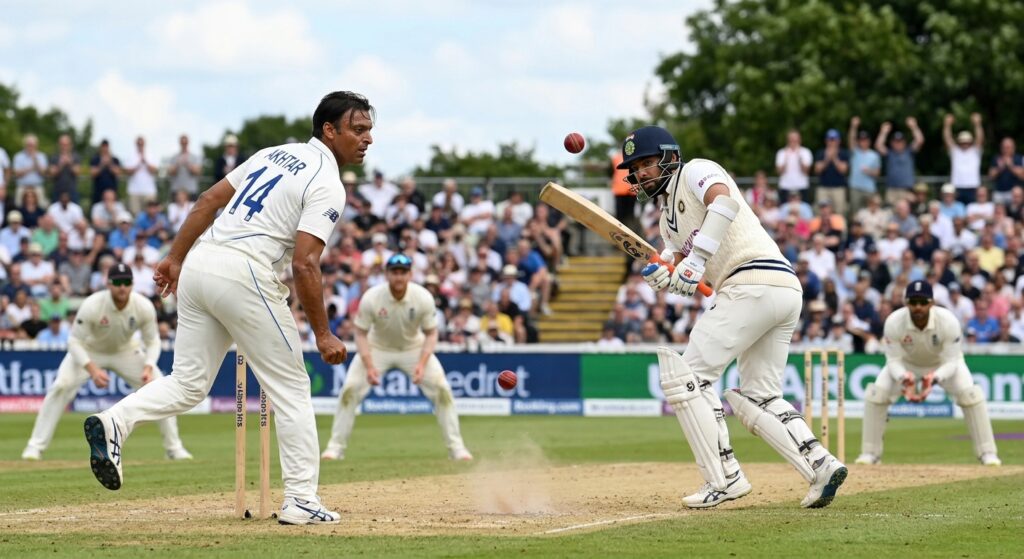
Cricket is a game filled with different types of bowling deliveries, each designed to challenge the batter in a unique way. Some balls swing through the air, some spin sharply after pitching, and others keep low and surprise the batter. One of the most aggressive and exciting deliveries in cricket is the bouncer.
A well-directed bouncer can make even the most confident batter uncomfortable. It can force a player onto the back foot, interrupt their rhythm, and create chances for wickets. Fast bowlers have used bouncers for generations as both an attacking weapon and a way to test the courage and technique of opposition batters.
But what exactly is a bouncer in cricket, and why is it such an important part of fast bowling?
This guide explains everything beginners need to know about the bouncer, including how it works, why bowlers use it, the rules surrounding it, and how batters attempt to play it safely.
What Is a Bouncer in Cricket?
A bouncer in cricket is a short-pitched delivery bowled with enough pace that, after bouncing on the pitch, it rises sharply toward the batter’s upper body, shoulders, head, or helmet.
Unlike a traditional good-length delivery, a bouncer is intentionally pitched shorter. The aim is not necessarily to hit the stumps directly. Instead, the bowler tries to surprise, intimidate, or force the batter into making a mistake.
A typical bouncer follows this pattern:
- The fast bowler releases the ball at high speed.
- The ball lands short of a good length on the pitch.
- It rises sharply after hitting the surface.
- The batter must quickly decide whether to duck, evade, defend, or attack.
The speed of the delivery and the bounce available from the pitch determine how dangerous and effective a bouncer can be.
Why Is It Called a Bouncer?
The name comes from the way the ball bounces sharply upward after pitching.
A normal delivery may bounce around knee or waist height, depending on its length. A bouncer, however, is deliberately bowled shorter so that it climbs much higher toward the batter.
The amount of bounce depends on several factors:
- Bowler’s pace
- Pitch conditions
- Length of the delivery
- Height of the bowler
- Seam position
- Weather and surface characteristics
Fast, hard pitches generally provide more assistance to bowlers who rely on short-pitched bowling.
How Does a Bowler Bowl a Bouncer?
Bowling a successful bouncer requires much more than simply bowling the ball short.
The bowler must combine pace, accuracy, and surprise. If the ball is too short and too slow, the batter may have plenty of time to play an attacking shot. If it is bowled too full, it may not rise enough.
A fast bowler usually aims for a short length that allows the ball to climb sharply after pitching.
Key Elements of a Good Bouncer
| Element | Importance |
|---|---|
| Pace | Gives the batter less reaction time |
| Short length | Helps the ball rise sharply |
| Accuracy | Targets an uncomfortable area |
| Surprise | Makes the delivery more difficult to handle |
| Pitch bounce | Determines how high the ball rises |
The best bouncers often arrive unexpectedly. A bowler may deliver several fuller balls before suddenly bowling a short one.
This change in length can catch a batter off guard.
Why Do Bowlers Use Bouncers?
Bowlers use bouncers for several tactical reasons. Although the delivery can appear aggressive, it is also an important strategic weapon.
1. To Push the Batter onto the Back Foot
A bouncer forces the batter to move backward. This can create opportunities for the bowler’s next delivery.
For example, after pushing a batter onto the back foot with a short ball, the bowler may follow up with a fuller delivery aimed at the stumps.
The change in length can make the batter uncertain about where to position themselves.
2. To Create Fear or Pressure
Cricket is as much a mental game as a physical one. A fast and accurate bouncer can make a batter think twice before committing to attacking shots.
Repeated short-pitched deliveries may affect a player’s confidence and concentration.
However, the purpose of professional cricket is competition, not deliberate injury. Strict rules exist to prevent dangerous bowling.
3. To Force a Mistake
A batter may react poorly to a bouncer by:
- Playing a rushed hook shot
- Attempting a pull without control
- Gloving the ball
- Hitting it in the air
- Losing balance
Fielding positions are often adjusted specifically to catch mistakes caused by short-pitched bowling.
4. To Break a Batter’s Rhythm
Some batters become comfortable when facing deliveries in the same area repeatedly. A surprise bouncer disrupts that rhythm.
Variation is one of the most important skills in fast bowling.
Is a Bouncer the Same as a Short Ball?
The terms are closely related, but they are not always exactly the same.
A short ball simply refers to a delivery that pitches short. It may rise to different heights depending on the pace and pitch.
A bouncer is generally a more aggressive short-pitched delivery intended to rise sharply toward the batter’s upper body or head area.
Therefore, most bouncers are short balls, but not every short ball is necessarily described as a bouncer.
What Are the Rules for Bouncers in Cricket?
Cricket has laws and playing conditions that regulate dangerous short-pitched bowling.
The exact number of permitted bouncers can vary depending on the format and competition rules. International matches, domestic competitions, and junior cricket may have different restrictions.
Generally, umpires monitor short-pitched deliveries carefully.
A delivery may be considered dangerous if it repeatedly threatens the batter without a legitimate cricketing purpose.
Important Factors Considered by Umpires
Umpires may consider:
- The height of the delivery
- The speed of the bowler
- How many short-pitched balls have been bowled
- Whether the bowling appears dangerous
- The skill and safety of the batter
Modern cricket places significant importance on player safety. Helmets and improved protective equipment have also become essential, particularly when facing fast bowlers.
How Do Batters Play a Bouncer?
Facing a bouncer requires quick reactions and good judgment. A batter has several options depending on the line, height, and speed of the ball.
Ducking
The safest option is often to simply duck underneath the ball.
The batter lowers their body and allows the ball to pass safely through to the wicketkeeper.
This requires confidence and awareness because the batter must judge the height correctly.
Leaving the Ball
If the ball is outside the line of danger, the batter may move away and leave it.
Experienced players often make leaving a bouncer look easy, but judging a fast-moving cricket ball is extremely difficult.
Defending
Some shorter deliveries can be controlled using the bat. However, attempting to defend a rapidly rising ball can be risky.
A poorly timed defensive shot may result in an edge or catch.
Hook Shot
The hook shot is an attacking response to a bouncer.
The batter swings across the line and attempts to hit the ball, usually toward the leg side.
When timed properly, the hook can produce a spectacular boundary. When mistimed, it can create an easy catching opportunity.
Pull Shot
The pull shot is another popular response to a short ball. The batter uses the pace of the delivery and strikes the ball toward the leg side.
The difference between a pull and hook often depends on the height of the ball. A pull is usually played against a shorter delivery around chest or waist height, while a hook is commonly used against a higher ball.
Bouncer vs Yorker
Bouncers and yorkers are completely different types of deliveries, although both are major weapons for fast bowlers.
| Feature | Bouncer | Yorker |
|---|---|---|
| Length | Short | Very full |
| Main direction | Rises toward upper body | Targets feet and stumps |
| Purpose | Surprise and pressure | Beat the batter and attack stumps |
| Batter position | Usually moves backward | Must react quickly downward |
| Difficulty | Requires judgment of bounce | Requires quick bat placement |
A clever fast bowler often uses both deliveries during the same spell.
For example, a bowler may use a bouncer to push the batter backward and then follow with a yorker. The sudden change in length makes batting extremely difficult.
Famous Fast Bowlers Known for Bouncers
Throughout cricket history, many legendary fast bowlers have used the bouncer as a key part of their attack.
Shoaib Akhtar was famous for extreme pace and intimidating short-pitched bowling. His ability to bowl fast bouncers made him one of the most feared bowlers of his generation.
Brett Lee also regularly used short deliveries to challenge batters.
Other great fast bowlers associated with aggressive short-pitched bowling include:
- Curtly Ambrose
- Glenn McGrath
- Dale Steyn
- Mitchell Johnson
Different bowlers use bouncers differently. Some rely purely on speed, while others use bounce, angles, and clever variations.
Why Pitch Conditions Matter
Not every cricket pitch is equally suitable for bouncers.
Some pitches are slow and low, making it difficult for the ball to rise sharply. Others have hard surfaces that provide significant pace and bounce.
Generally, fast bowlers enjoy bowling bouncers on pitches with:
- Hard surfaces
- Consistent bounce
- Extra pace
- Good carry to the wicketkeeper
Taller bowlers can also naturally generate additional bounce because of their higher release point.
This is why tall fast bowlers can be particularly difficult to face on lively pitches.
The Psychological Side of the Bouncer
The bouncer is not only a physical challenge. It is also a psychological weapon.
When a fast bowler delivers a quick bouncer, the batter must make an immediate decision. There is very little time to think.
A batter who becomes nervous may start anticipating another bouncer. This can make them vulnerable to a fuller delivery.
For example, imagine a bowler delivering the following sequence:
- Good-length ball
- Outswinger
- Short bouncer
- Another short ball
- Full yorker
The batter must constantly adjust their position and expectations.
This is why intelligent fast bowling is often described as a battle of strategy between bowler and batter.
Are Bouncers Dangerous?
A bouncer can be dangerous because it travels at high speed toward the upper body or head area.
Modern cricket has improved safety considerably through the use of helmets, neck guards, and better protective equipment.
Players facing fast bowling commonly wear:
- Helmets
- Gloves
- Arm guards
- Chest guards
- Thigh pads
- Abdominal protection
Despite this equipment, players must still respect fast bowling.
Young and inexperienced cricketers should learn how to react to short-pitched deliveries under proper coaching. Attempting aggressive hook shots without the right technique can be risky.
How to Bowl an Effective Bouncer
For aspiring fast bowlers, accuracy is more important than simply trying to bowl as fast as possible.
A good bouncer should be:
- Controlled
- Well-directed
- Unexpected
- Used strategically
Young bowlers should focus on developing a consistent action before attempting excessive short-pitched bowling.
A useful approach is to mix deliveries rather than bowling bouncers repeatedly.
For example:
Full delivery → Good length → Short ball → Yorker
Variation makes bowling much harder to predict.
Final Thoughts
A bouncer in cricket is a short-pitched delivery designed to rise sharply toward the batter’s upper body or head area. It is one of the most exciting weapons available to fast bowlers and has played an important role in cricket for generations.
A successful bouncer is not simply about bowling fast. It requires the right length, pace, accuracy, timing, and tactical awareness. Bowlers use it to create pressure, disrupt rhythm, push batters onto the back foot, and force mistakes.
For batters, facing a bouncer is a test of courage, technique, and quick decision-making. They must judge whether to duck, leave, defend, pull, or hook the ball in a fraction of a second.
When used responsibly and within the rules of the game, the bouncer adds another fascinating dimension to cricket. It represents the intense contest between fast bowler and batter—a contest of speed, skill, strategy, and nerve.
Whether you are a beginner learning cricket or a dedicated fan watching international matches, understanding the bouncer helps you appreciate just how complex and exciting fast bowling can be.
