


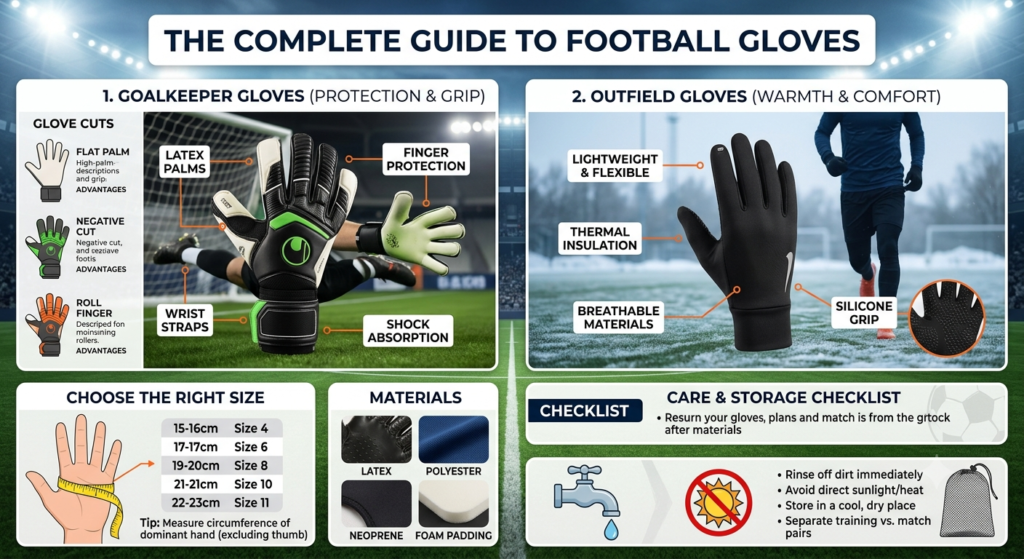
Whether you’re a goalkeeper making crucial saves, a striker playing on a freezing winter morning, or a young player training in cold weather, football gloves can make a noticeable difference. They improve comfort, help keep your hands warm, and, in some cases, provide extra grip when handling the ball.
Many new players assume gloves are only for goalkeepers, but that’s no longer true. Today, outfield players also wear specially designed football gloves during cold conditions. These lightweight gloves keep hands warm without affecting movement, while goalkeeper gloves are built with padded palms and high-grip latex to improve catching and shot-stopping.
If you’re planning to buy your first pair or simply want to understand the different types available, this guide explains everything you need to know.
What Are Football Gloves?
Football gloves are gloves specifically designed for football players. Their design depends on the position being played.
There are two main categories:
| Type | Purpose |
|---|---|
| Goalkeeper Gloves | Improve grip, cushioning, and hand protection while catching the ball. |
| Outfield Football Gloves | Keep players’ hands warm while allowing natural movement during cold weather. |
Although both are called football gloves, they serve completely different purposes.
Why Do Football Players Wear Gloves?
Football is played throughout the year, including during winter when temperatures can become very low.
Players wear gloves for several reasons:
- Keep hands warm
- Improve comfort
- Maintain flexibility in cold weather
- Protect skin from wind and cold
- Enhance goalkeeper grip
For goalkeepers, gloves are an essential part of their equipment. For outfield players, they’re optional but widely used during colder months.
Types of Football Gloves
Understanding the differences between glove types helps you choose the right pair.
1. Goalkeeper Gloves
These are designed specifically for catching, punching, and controlling the football.
Common features include:
- Latex palms
- Finger protection
- Wrist straps
- Shock absorption
- Extra grip in wet conditions
Professional goalkeepers rarely play without them.
2. Thermal Football Gloves
Thermal gloves are made for outfield players.
They are:
- Lightweight
- Flexible
- Breathable
- Warm
- Comfortable
Unlike goalkeeper gloves, they are not designed for catching the ball.
3. Grip Training Gloves
Some training gloves include textured palms that help players hold training equipment or improve grip during fitness sessions.
These are more common during gym work than in competitive matches.
Football Gloves Comparison
| Feature | Goalkeeper Gloves | Outfield Gloves |
|---|---|---|
| Ball Grip | Excellent | Limited |
| Warmth | High | High |
| Padding | Yes | No |
| Latex Palm | Yes | No |
| Finger Protection | Available | No |
| Match Requirement | Essential for goalkeepers | Optional |
Main Parts of a Goalkeeper Glove
A quality goalkeeper glove consists of several important components.
| Part | Function |
|---|---|
| Palm | Provides grip on the football. |
| Backhand | Protects the back of the hand during saves. |
| Fingers | Improve comfort and flexibility. |
| Wrist Strap | Keeps the glove secure during movement. |
| Closure System | Ensures a snug fit around the wrist. |
Each part plays an important role in helping goalkeepers perform confidently.
Why Grip Matters
Grip is the biggest reason goalkeepers invest in quality gloves.
A good latex palm helps:
- Catch crosses more securely
- Hold powerful shots
- Reduce rebounds
- Improve confidence
- Perform better in wet conditions
However, grip naturally decreases as the latex wears down, which is why gloves need proper care.
Choosing the Right Size
A glove that is too small can feel uncomfortable, while one that is too large may reduce control.
A simple way to estimate your size is by measuring the circumference of your dominant hand (excluding the thumb).
| Hand Circumference | Suggested Glove Size |
|---|---|
| 15–16 cm | Size 4 |
| 16–17 cm | Size 5 |
| 17–18 cm | Size 6 |
| 18–19 cm | Size 7 |
| 19–20 cm | Size 8 |
| 20–21 cm | Size 9 |
| 21–22 cm | Size 10 |
| 22–23 cm | Size 11 |
Note: Sizes may vary slightly between manufacturers.
Materials Used in Football Gloves
Different materials affect comfort, durability, and performance.
| Material | Purpose |
|---|---|
| Latex | Provides excellent grip for goalkeepers. |
| Polyester | Makes gloves lightweight and breathable. |
| Neoprene | Improves flexibility and comfort. |
| Silicone | Adds grip to some training gloves. |
| Foam Padding | Absorbs the impact of powerful shots. |
When Should Outfield Players Wear Gloves?
Not every match requires gloves.
Many players choose to wear them when:
- Temperatures drop below 10°C
- It’s windy
- Training early in the morning
- Playing in rain or snow
- Hands become stiff in cold weather
In warm conditions, most outfield players prefer not to wear gloves.
Are Football Gloves Mandatory?
No.
The rules of football do not require outfield players to wear gloves.
However:
- Goalkeepers almost always wear goalkeeper gloves.
- Outfield players decide based on personal preference and weather conditions.
Many professionals wear thermal gloves during winter league matchesUnderstanding Goalkeeper Glove Cuts
One of the first things you’ll notice when shopping for goalkeeper gloves is the variety of glove cuts. The “cut” refers to how the palm is stitched to the fingers, affecting fit, comfort, and ball control.
Each cut has its own advantages, and the best choice depends on your playing style.
| Glove Cut | Best For | Main Advantage |
|---|---|---|
| Flat Palm | Beginners | Comfortable fit with a large catching surface |
| Negative Cut | Professional and advanced goalkeepers | Close-fitting design for better ball control |
| Roll Finger | Goalkeepers who prefer extra grip | More latex contacts the ball |
| Hybrid Cut | All-around performance | Combines features of multiple cuts |
Flat Palm Gloves
Flat palm gloves are among the most common designs and are often recommended for new goalkeepers.
Advantages
- Comfortable to wear
- Larger contact area with the ball
- Good ventilation
- Affordable
- Easy to break in
Many youth goalkeepers begin with flat palm gloves before trying other styles.
Negative Cut Gloves
Negative cut gloves have internal stitching, creating a tighter fit around the fingers.
This design offers:
- Better ball feel
- Improved control
- A snug fit
- Less loose material
Professional goalkeepers often choose negative cut gloves because they allow precise handling.
Roll Finger Gloves
Roll finger gloves wrap the latex around the fingers instead of stitching it flat.
Benefits include:
- Excellent grip
- Larger latex surface
- Secure catching
- Comfortable finger shape
They are particularly useful for goalkeepers who frequently deal with high crosses.
Hybrid Cut Gloves
Hybrid gloves combine elements from two or more glove cuts.
For example:
- Roll Finger + Negative
- Flat Palm + Roll Finger
These gloves aim to provide:
- Strong grip
- Comfortable fit
- Better flexibility
- Balanced performance
They have become increasingly popular at both amateur and professional levels.
What Is Finger Save Technology?
Some goalkeeper gloves include flexible plastic supports inside the fingers.
These supports help prevent fingers from bending backward during powerful shots.
Advantages
- Extra finger protection
- Reduced injury risk
- Increased confidence
- Helpful for younger goalkeepers
Possible Drawbacks
- Slightly heavier
- Less natural finger movement
- Not every goalkeeper prefers them
Whether to use finger-save gloves is largely a matter of personal preference.
Training Gloves vs Match Gloves
Many goalkeepers own more than one pair of gloves.
Using the same pair every day for training and matches causes the latex to wear out much faster.
| Feature | Training Gloves | Match Gloves |
|---|---|---|
| Durability | High | Moderate |
| Grip | Good | Excellent |
| Latex Quality | Basic | Premium |
| Price | Lower | Higher |
| Recommended Use | Daily practice | Competitive matches |
A common strategy is to train with a durable pair and save premium gloves for important games.
How to Clean Football Gloves
Proper care can significantly extend the life of your gloves.
After Every Match
- Rinse the gloves with cool or lukewarm water.
- Gently remove dirt from the palms.
- Avoid harsh detergents.
- Squeeze out excess water without twisting the gloves.
- Let them air dry naturally.
Avoid
- Direct sunlight
- Hair dryers
- Radiators
- Washing machines
High heat can damage the latex and reduce grip.
How to Store Football Gloves
Storage is just as important as cleaning.
Keep your gloves:
- In a cool, dry place
- Away from direct sunlight
- Flat or inside a glove bag
- Slightly damp if recommended by the manufacturer before a match
Avoid tossing them into the bottom of your football bag for days after playing, as moisture and dirt can shorten their lifespan.
Common Mistakes Players Make
Many goalkeepers unintentionally reduce the life of their gloves.
Here are some common mistakes:
| Mistake | Result |
|---|---|
| Wearing match gloves for every training session | Faster latex wear |
| Drying gloves on a radiator | Damaged grip |
| Not cleaning after muddy matches | Dirt breaks down the latex |
| Pulling gloves off by the fingertips | Can tear the stitching |
| Using gloves on rough artificial surfaces unnecessarily | Accelerates palm wear |
Simple care habits can keep gloves performing well for much longer.
Budget vs Premium Football Gloves
Do expensive gloves always perform better? Not necessarily.
Here’s a general comparison:
| Feature | Budget Gloves | Premium Gloves |
|---|---|---|
| Price | Lower | Higher |
| Grip | Good | Excellent |
| Durability | Good | Varies depending on latex softness |
| Comfort | Basic | Advanced fit and materials |
| Best For | Beginners and casual players | Competitive goalkeepers |
Premium gloves often provide better grip, but softer latex may wear out more quickly than durable training gloves.
Tips for Making Your Gloves Last Longer
Taking a few extra minutes to care for your gloves can save money over time.
- Use separate gloves for training and matches.
- Rinse dirt off immediately after use.
- Store them properly.
- Avoid pulling on the latex when removing gloves.
- Replace gloves when grip noticeably decreases.
With proper care, a quality pair of gloves can remain effective through many training sessions and matches.
Choosing Gloves Based on Your Playing Level
| Playing Level | Recommended Glove Type |
|---|---|
| Beginner | Flat Palm training gloves |
| School Football | Durable training gloves |
| Club Football | Negative or Hybrid Cut |
| Competitive Goalkeeper | Premium Match Gloves |
| Professional Level | High-quality Hybrid or Negative Cut gloves with advanced latex |
Selecting the right glove depends on your experience, budget, and how often you play.
Signs It’s Time to Replace Your Gloves
Even the best football gloves wear out over time. Replacing them at the right moment ensures better performance and safety.
Watch for these signs:
- Latex is peeling or cracking.
- Grip has noticeably decreased.
- Padding feels compressed.
- Stitching has started to come apart.
- Wrist strap no longer holds securely.
- Holes appear around the fingers or palm.
If several of these issues are present, a new pair is likely the better option.
Buying Checklist
Before purchasing football gloves, consider the following factors:
| Feature | Why It Matters |
|---|---|
| Correct Size | Ensures comfort and control. |
| Glove Cut | Affects fit and ball handling. |
| Latex Quality | Determines grip and durability. |
| Finger Protection | Useful for younger or beginner goalkeepers. |
| Wrist Support | Helps keep the glove secure. |
| Budget | Choose gloves that match your playing level and frequency. |
Taking time to compare these features will help you make a better buying decision.
Football Gloves Care Checklist
Following a simple routine can help maintain performance throughout the season.
| After Every Match | Once a Week |
|---|---|
| Rinse off dirt | Inspect stitching |
| Air dry naturally | Check wrist strap condition |
| Store in a cool place | Remove stubborn dirt carefully |
| Keep away from heat | Ensure gloves are completely dry before storage |
Tips for Getting the Best Performance
Whether you’re a beginner or an experienced goalkeeper, these habits can improve your experience with football gloves:
- Wet the latex slightly before playing if recommended by the manufacturer.
- Avoid rubbing your palms against goalposts or rough surfaces.
- Use a separate pair for training to preserve your match gloves.
- Clean gloves as soon as possible after muddy games.
- Store them in a breathable glove bag instead of a sealed plastic bag.
Small habits like these can make a noticeable difference over a season.
Final Thoughts
Football gloves are more than just an accessory—they’re an important part of a player’s equipment. For goalkeepers, they provide grip, cushioning, and protection that can make the difference between a routine save and a costly mistake. For outfield players, thermal gloves offer warmth and comfort during cold-weather matches without limiting movement.
Choosing the right pair depends on your position, skill level, budget, and playing conditions. Beginners may prefer durable flat-palm gloves, while experienced goalkeepers often choose negative or hybrid cuts for improved control. Regardless of the type you choose, proper care is essential. Cleaning gloves after every game, storing them correctly, and using separate pairs for training and matches will help them last longer and perform better.
Investing in gloves that fit well and suit your needs will not only improve comfort but also increase confidence every time you step onto the pitch.
