


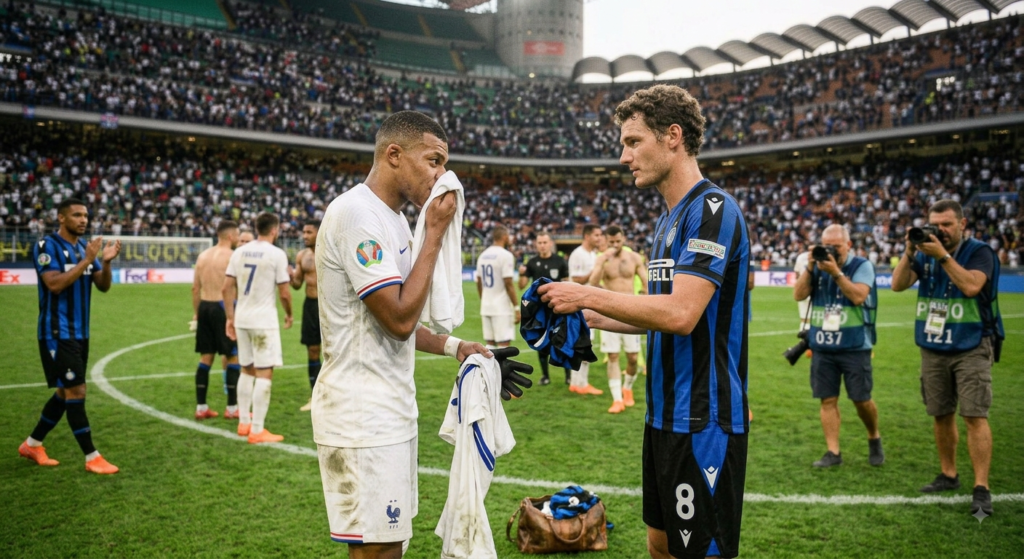
If you have watched a football match until the final whistle, you may have noticed a familiar scene. The players shake hands, congratulate one another, and then some of them remove their shirts and exchange them with an opponent. For fans who are new to football, this can seem like a strange tradition. After all, football shirts are part of a player’s professional equipment, and some of them are expensive or specially designed for a particular match.
So, why do football players swap shirts?
The simple answer is that swapping shirts is usually a sign of respect, friendship, sportsmanship, and appreciation between players. A player may exchange shirts with an opponent because they admire his ability, have developed a relationship with him, or want to keep a personal reminder of an important match.
However, there is more behind the tradition than simply trading pieces of clothing. Shirt swapping has become one of football’s most recognizable customs, and over the years it has developed into a meaningful part of the sport.
What Does Swapping Football Shirts Mean?
When two players swap shirts after a match, it normally represents mutual respect.
Football can be extremely competitive. During 90 minutes, players may tackle each other, argue over decisions, compete for the ball, and do everything possible to defeat the opposition. Once the match is over, however, the competitive side of the relationship often disappears.
Exchanging shirts can be a way of saying, “I respect you as a player.”
This is particularly common when two highly respected players have competed against each other. A defender might want the shirt of a famous striker because he has admired that striker for years. Similarly, a young player may ask an experienced international star for his shirt as a special memory.
The shirt therefore becomes more than clothing. It becomes a souvenir connected to a particular moment in a player’s career.
A Sign of Sportsmanship
One of the biggest reasons players swap shirts is sportsmanship.
Football is built around competition, but good sportsmanship is also an important part of the game. Players are expected to compete seriously while respecting their opponents.
A shirt exchange after the final whistle can show that the rivalry on the pitch was only part of the match. Players can compete fiercely for their clubs or countries and still appreciate the opponent afterward.
For example, two players might spend an entire match battling for the same area of the pitch. One could be trying to stop the other from scoring, while the other is constantly attempting to get past him. Despite that competition, both players may recognize each other’s quality.
The shirt exchange becomes a quiet way to acknowledge that respect.
Why Would a Player Want Another Player’s Shirt?
Not every shirt has the same personal value.
A footballer may want an opponent’s shirt because the player is a childhood hero, a legendary footballer, a national-team star, or simply someone whose playing style they admire.
Imagine a young midfielder playing against a player he watched on television while growing up. After the match, getting that player’s shirt could be a memorable experience.
For the younger footballer, the shirt might represent a stage in his own journey.
Years later, he could look at it and remember the first time he competed against someone he once considered an idol.
This is one reason shirt swapping can have a strong emotional value even for professional athletes who already own plenty of football shirts.
The Shirt Becomes a Personal Souvenir
Football matches come and go quickly. A player may participate in hundreds of matches during a career, and many of those games eventually become difficult to remember in detail.
A shirt can preserve the memory of one particular match.
A player might keep a shirt from:
- A major international tournament
- A Champions League match
- A derby
- A World Cup game
- A memorable final
- A first meeting with a famous opponent
- A match against a childhood idol
- A historic victory
The shirt can act almost like a physical photograph.
It reminds the player where he was, who he played against, and what happened on that particular day.
When Did Football Shirt Swapping Become Popular?
The exact beginning of shirt swapping is difficult to identify because players have exchanged or given away football shirts for many decades. However, the practice became increasingly visible as professional football grew internationally and players from different countries competed against one another more frequently.
International tournaments helped make the tradition particularly recognizable.
When players from different nations meet at a major competition, they may have little opportunity to play against each other regularly. A shirt from that match can therefore become an important keepsake.
Over time, television coverage and photographs also made the tradition familiar to supporters around the world.
Today, seeing two players exchange shirts after an important match is hardly unusual.
International Football Makes Shirt Swapping Special
Shirt exchanges can have an especially strong meaning in international football.
Club teammates normally see each other throughout a season, while international opponents may only meet occasionally. A World Cup or European Championship match could be the only competitive meeting between two players.
That makes the shirt a unique souvenir.
For example, a player might exchange shirts with an opponent after a World Cup match and keep it for the rest of his life. The shirt can represent not only the opponent but also the tournament, the stadium, and the atmosphere surrounding the game.
For many footballers, these experiences become important memories after retirement.
Do Players Ask for Shirts Before the Match?
Sometimes players arrange shirt exchanges before the match, while in other cases the decision happens after the final whistle.
A player may approach an opponent and ask whether they would like to exchange shirts. In other situations, the players may already know each other and have agreed beforehand.
There is no universal rule saying that shirts must be exchanged.
It is a personal choice.
Some players regularly collect shirts from opponents, while others rarely participate in the tradition.
Why Don’t All Players Swap Shirts?
It is important to remember that not every football player swaps shirts after every match.
There are several reasons.
First, players may simply prefer to keep their own shirts. A player might want to save his match-worn shirt as a personal memory or give it to a family member.
Second, some shirts have special significance to the club or national team. A player may decide to keep a particular shirt rather than exchange it.
There can also be practical considerations. Players normally need to leave the field, attend post-match activities, speak to coaches, or participate in media duties. There is not always time for a shirt exchange.
So, while the tradition is common, it is certainly not compulsory.
Match-Worn Shirts Can Be Extremely Valuable
A shirt worn during an important match can become valuable because it carries a direct connection to that event.
Collectors often value match-worn football shirts because they are different from ordinary replica shirts sold in stores.
A match-worn shirt may contain:
- The player’s name and number
- Tournament patches
- Competition badges
- Match-specific details
- Signs of actual use during the game
If the player is famous or the match is historically important, the shirt can become a highly desirable collectible.
This is another reason why players may choose to exchange shirts. They are essentially trading unique pieces of football history.
Shirt Swapping Between Famous Players
Some shirt exchanges become memorable because of the players involved.
When two internationally recognized stars exchange shirts, photographs of the moment can quickly spread across newspapers and social media. Fans may discuss the exchange for years.
The meaning can be particularly interesting when the two players have competed for individual awards or have faced each other repeatedly.
A shirt exchange can show that professional rivalry does not necessarily mean personal hostility.
Two players can compete intensely while still respecting one another’s achievements.
Is Shirt Swapping Allowed?
Yes. There is no general football law that prohibits players from exchanging shirts after a match.
However, players must follow the rules concerning their playing equipment during the match itself. Removing a shirt during certain celebrations can result in a disciplinary sanction under the Laws of the Game.
That is different from swapping shirts after the match.
Once the game has finished, players can exchange shirts as part of their post-match interactions.
This distinction is important because people sometimes confuse the tradition of swapping shirts with the separate issue of removing a shirt during a goal celebration.
Why Do Fans Love Shirt Swapping?
Fans enjoy shirt swapping because it shows a different side of football.
During a match, supporters are usually focused on their own team. They celebrate goals, criticize refereeing decisions, and support their favorite players.
After the match, however, a shirt exchange can provide a reminder that football is also about relationships and respect.
For young supporters especially, seeing famous players exchange shirts can be inspiring.
It shows that competition does not have to eliminate respect.
Shirt Swapping Can Build Relationships
Professional footballers travel constantly and meet players from many different countries.
A shirt exchange can help create or strengthen friendships between players.
Some footballers have played together at previous clubs or international youth teams. Others may have known each other since childhood. For them, swapping shirts can be a personal gesture rather than a simple football tradition.
Even when players do not know each other well, exchanging shirts can be a way to recognize a memorable performance.
A goalkeeper might exchange shirts with an opposing striker after making several important saves. A defender could swap with a forward after a particularly demanding battle.
The gesture acknowledges the competition while also respecting the opponent.
What Happens to the Shirts After They Are Swapped?
Players can do whatever they want with the shirt they receive.
Some keep them in private collections. Others frame them and display them at home. Some give them to family members, friends, or charities.
A few shirts eventually end up in museums or football exhibitions.
For retired footballers, these collections can become a visual record of their careers.
One shirt might remind them of a European final. Another might represent their first international appearance. Another could be from a match against one of the greatest players of their generation.
In that sense, shirt collections can tell the story of a footballer’s career.
Why Is the Tradition Still Important?
Modern football has become increasingly commercial. Clubs have enormous global audiences, players have major sponsorship agreements, and shirts are sold to millions of supporters.
Despite this commercial side, shirt swapping remains surprisingly personal.
It is not primarily about money.
A player receiving a shirt from an opponent is usually receiving something that was worn during a real competitive event. That personal connection gives it a value that cannot always be measured financially.
The shirt carries memories.
Shirt Swapping and Respect Between Rivals
Perhaps the most powerful part of the tradition is that it demonstrates how rivalry and respect can exist together.
A player can spend 90 minutes trying to defeat an opponent and then shake his hand afterward.
That is one of the qualities that makes sport special.
Football teaches competition, but it also teaches players how to deal with winning, losing, pressure, disappointment, and respect. The shirt exchange is a small gesture, but it reflects that larger idea.
Final Thoughts
So, why do football players swap shirts?
The main reasons are respect, sportsmanship, friendship, admiration, and the desire to keep a lasting memory of an important match. For some players, receiving an opponent’s shirt is a personal honor. For others, it is a way to remember a special tournament, a difficult opponent, or an important moment in their career.
The tradition has survived because it represents something simple: once the competition ends, respect remains.
A match-worn football shirt is not just a piece of fabric. For the player who receives it, it can represent a story, a rivalry, a friendship, or a moment that may never happen again.
That is why the image of two footballers exchanging shirts after the final whistle has become such a familiar and meaningful part of the beautiful game.
