


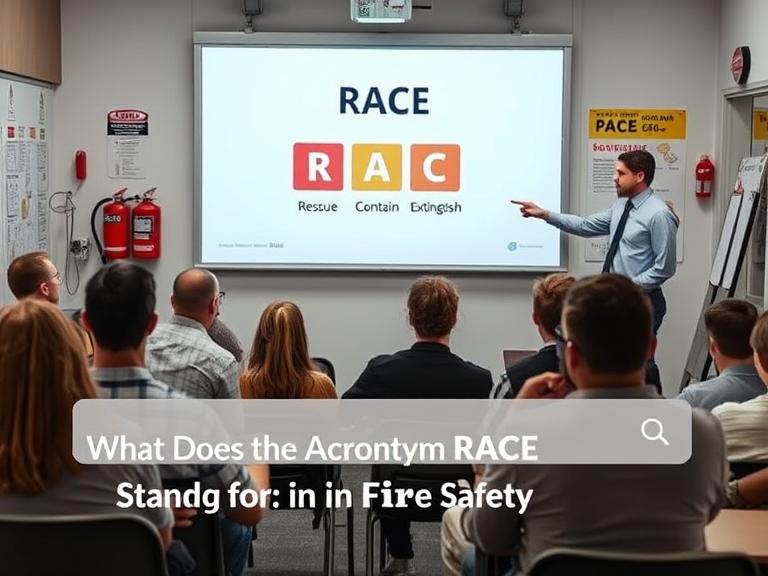
What Does the Acronym RACE Stand for in Fire Safety? Fire safety protocols save lives, and one of the most critical emergency response systems is encapsulated in the simple acronym RACE. Whether you’re in a workplace, school, or public building, understanding RACE could mean the difference between safety and catastrophe during a fire emergency.
This article will explain:
- The meaning of each letter in RACE
- How to properly execute each step
- Why this protocol is vital for fire safety
- Common mistakes to avoid
- Additional fire safety tips
Breaking Down the RACE Acronym
RACE provides a clear, step-by-step framework for responding to fire emergencies. Here’s what each letter represents:
R – Rescue
Immediate Action: Safely remove anyone in immediate danger from the fire area.
How to Execute:
- Assess if evacuation is possible without endangering yourself
- Help those who need assistance (children, elderly, disabled individuals)
- Never use elevators during a fire evacuation
- If smoke is present, stay low where the air is clearer
Important Note: Your personal safety comes first. Only attempt rescue if it can be done safely.
A – Alarm
Immediate Action: Activate the fire alarm system to alert all occupants.
How to Execute:
- Locate and pull the nearest manual fire alarm pull station
- Shout clear warnings like “FIRE! EVACUATE!”
- Call emergency services (911 or local fire department) if alarms don’t automatically notify them
Why This Matters: Early warning gives everyone the best chance to evacuate safely.
C – Contain
Immediate Action: Limit the fire’s spread by closing doors and windows.
How to Execute:
- Close all doors behind you as you evacuate (compartmentalizes the fire)
- If safe to do so, shut windows to reduce oxygen supply to the fire
- Turn off HVAC systems if you’re trained to do so (prevents spreading smoke)
Science Behind It: Fires need oxygen to grow. Containment can dramatically slow progression.
E – Extinguish/Evacuate
Decision Point: Either:
- Use a fire extinguisher (if properly trained and the fire is very small), OR
- Evacuate immediately (for larger fires or if unsure)
How to Decide:
✔ Extinguish Only If:
- The fire is smaller than a trash can
- You have the correct type of extinguisher
- You’ve been trained in proper use
- Your exit path is clear
✖ Evacuate Immediately If:
- The fire is growing rapidly
- Smoke makes breathing difficult
- You’re unsure about extinguisher use
Why the RACE Protocol Matters
- Standardized Response: Creates uniform expectations during chaos
- Prioritizes Life Safety: Focuses first on getting people to safety
- Minimizes Property Damage: Proper containment can save buildings
- Legal Compliance: Many jurisdictions require RACE training in workplaces
- Reduces Panic: Clear steps help people stay calmer in emergencies
Common RACE Protocol Mistakes to Avoid
❌ “Rescue” Overreach: Attempting dangerous rescues without proper equipment
❌ Delaying Alarm: Trying to fight the fire before alerting others
❌ Improper Containment: Leaving doors/windows open while evacuating
❌ Wrong Extinguisher Use: Using water on electrical or grease fires
❌ Evacuation Hesitation: Staying too long to gather belongings
Additional Fire Safety Tips
- Know Exits: Always identify at least two escape routes in new buildings
- Practice Drills: Regular fire drills improve reaction times
- Extinguisher Training: Learn PASS technique (Pull, Aim, Squeeze, Sweep)
- Stop-Drop-Roll: Remember this if clothing catches fire
- Fire Safety Equipment: Ensure smoke detectors and sprinklers are functional
FAQs About RACE in Fire Safety
1. Is RACE used worldwide?
Yes, it’s an internationally recognized protocol, though some countries may use slight variations.
2. What’s the difference between RACE and PASS?
RACE is for general fire response, while PASS (Pull, Aim, Squeeze, Sweep) specifically guides extinguisher use.
3. Should I always attempt to extinguish the fire?
No – only if all these apply: it’s very small, you’re trained, you have the right extinguisher, and escape routes are clear.
4. How often should RACE training be conducted?
OSHA recommends annual training, with more frequent drills in high-risk environments.
5. What if I’m alone when I discover a fire?
Still follow RACE: Get yourself to safety first, then sound alarms from a safe location.
6. Does RACE apply to home fires?
Yes, though home fire plans may emphasize evacuation over containment/extinguishing.
7. Why close doors during evacuation?
Closed doors can slow fire spread by 5-10 minutes – crucial time for evacuation and firefighter response.
Final Thoughts
The RACE protocol transforms chaotic emergency situations into manageable, step-by-step responses. By memorizing these four letters – Rescue, Alarm, Contain, Extinguish/Evacuate – you equip yourself with knowledge that could save lives.
Remember:
- Practice makes perfect – participate in fire drills seriously
- Prevention is best – follow all fire safety precautions daily
- When in doubt, evacuate – no possession is worth risking lives
Fire safety is everyone’s responsibility. Share this knowledge with family, coworkers, and community members to create safer environments for all.
