


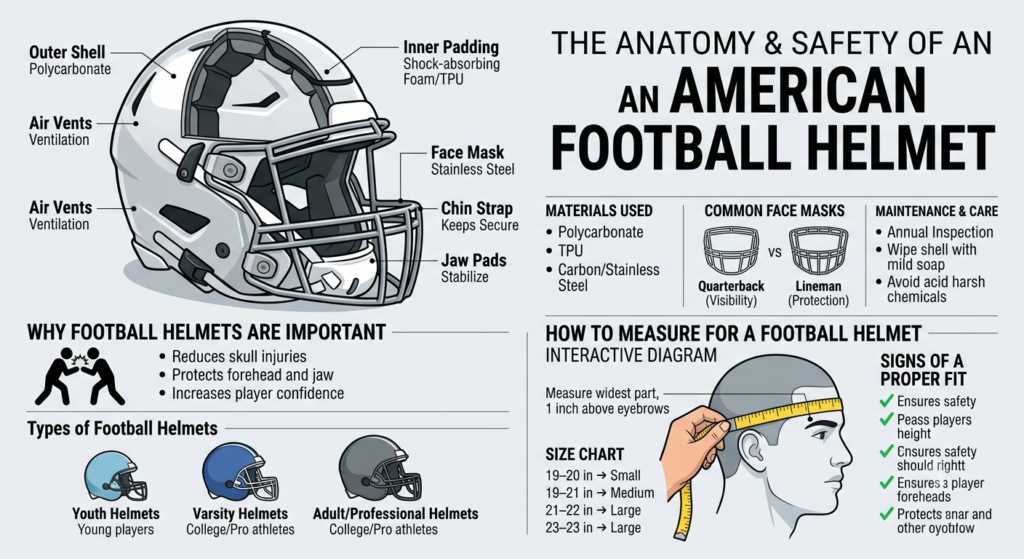
A football helmet is one of the most important pieces of protective equipment used in American football. Every player, from youth leagues to professional competitions, relies on a properly fitted helmet to reduce the risk of head injuries during games and practice sessions.
Unlike soccer, where helmets are generally not part of the standard equipment, American football is a high-impact sport involving frequent collisions. Because of this, helmets are carefully engineered with advanced materials, padding systems, and face masks designed to absorb impacts and protect players.
In this guide, you’ll learn how football helmets work, the different types available, key safety features, sizing tips, maintenance advice, and what to look for before buying one.
What Is a Football Helmet?
A football helmet is a hard protective headgear designed to shield players from impacts during tackles, blocks, and accidental collisions.
Although no helmet can completely prevent concussions, modern designs significantly reduce the force transferred to the head during impact.
Today’s football helmets combine:
- Strong outer shells
- Shock-absorbing interior padding
- Face masks
- Chin straps
- Ventilation systems
These components work together to improve both safety and comfort.
Main Parts of a Football Helmet
| Component | Purpose |
|---|---|
| Outer Shell | Protects against hard impacts |
| Inner Padding | Absorbs shock and cushions the head |
| Face Mask | Protects the face and eyes |
| Chin Strap | Keeps the helmet securely in place |
| Jaw Pads | Stabilize the helmet on the head |
| Air Vents | Improve airflow and reduce heat |
Each component plays an important role in ensuring the helmet performs effectively during play.
Why Football Helmets Are Important
Football involves frequent physical contact. Players may experience dozens of collisions during a single game.
A properly fitted helmet helps:
- Reduce skull injuries
- Protect the forehead
- Protect the jaw
- Reduce facial injuries
- Improve confidence while playing
- Meet league safety regulations
It is important to remember that helmets reduce risk—they do not eliminate it.
Types of Football Helmets
Different positions require different levels of protection.
| Helmet Type | Best For |
|---|---|
| Youth Helmet | Young players |
| Varsity Helmet | High school athletes |
| Adult Helmet | College and professional players |
| Speed Helmet | Skill positions |
| Traditional Helmet | Linemen and defensive players |
Manufacturers often design helmets specifically for quarterbacks, receivers, linebackers, and linemen because each position experiences different types of impacts.
Materials Used in Football Helmets
Modern football helmets use lightweight but durable materials.
Common materials include:
- Polycarbonate shell
- TPU padding
- Foam cushioning
- Stainless steel face masks
- Carbon steel face masks
- High-strength plastic clips
These materials provide an excellent balance between durability and weight.
Football Helmet Safety Features
Modern helmets include several advanced technologies.
Multi-Layer Padding
Multiple foam layers absorb impacts from different directions.
Impact Management
Specialized liners spread collision forces across a larger area.
Improved Chin Protection
Modern chin straps help stabilize the helmet during tackles.
Better Ventilation
Air channels help players stay cooler during games.
Lightweight Construction
Reduced weight helps minimize neck fatigue over long periods.
Football Helmet Size Chart
Choosing the correct size is essential for safety.
| Head Circumference | Helmet Size |
|---|---|
| 19–20 inches | Small |
| 20–21 inches | Medium |
| 21–22 inches | Large |
| 22–23 inches | Extra Large |
Always measure the player’s head before purchasing.
How to Measure for a Football Helmet
Follow these simple steps:
- Use a flexible measuring tape.
- Measure around the widest part of the head.
- Position the tape about one inch above the eyebrows.
- Compare the measurement with the manufacturer’s sizing chart.
- Try the helmet on before playing.
A proper fit should feel snug without causing discomfort.
Signs of a Proper Helmet Fit
A well-fitted football helmet should:
- Sit level on the head
- Cover the forehead
- Not slide backward
- Not rotate easily
- Stay secure when the chin strap is tightened
If the helmet moves excessively, it may not provide adequate protection.
Common Football Helmet Face Masks
Different positions use different face mask styles.
| Position | Typical Face Mask |
|---|---|
| Quarterback | Open visibility |
| Running Back | Balanced protection |
| Wide Receiver | Lightweight design |
| Linebacker | Extra facial protection |
| Lineman | Heavy-duty face mask |
The choice depends on visibility and protection requirements.
Average Weight of a Football Helmet
Helmet weights vary by model.
| Helmet Type | Average Weight |
|---|---|
| Youth Helmet | 3–4 lbs |
| Adult Helmet | 4–6 lbs |
| Professional Helmet | 5–6 lbs |
Manufacturers continually work to reduce weight while maintaining high safety standards.
Football Helmet Lifespan
A football helmet does not last forever.
General recommendations include:
- Annual inspection
- Regular reconditioning
- Replacement after significant damage
- Replacement according to manufacturer guidelines
Visible cracks, broken hardware, or damaged padding are signs that a helmet should no longer be used.
How to Clean a Football Helmet
Proper maintenance extends the life of a helmet.
Weekly Cleaning
- Wipe the shell with mild soap.
- Clean the face mask.
- Wash removable padding if permitted.
- Air dry completely.
Avoid
- Harsh chemicals
- Bleach
- Direct sunlight for long periods
- High heat
Popular Football Helmet Brands
Several manufacturers dominate the market.
| Brand | Known For |
|---|---|
| Riddell | Advanced impact technology |
| Schutt | Comfortable interior padding |
| Xenith | Innovative fit systems |
| VICIS | Modern impact protection |
Each brand offers helmets designed for different playing levels and budgets.
Approximate Price Range
Football helmets vary in price.
| Helmet Category | Estimated Price |
|---|---|
| Youth | $80–$180 |
| High School | $180–$350 |
| College | $300–$600 |
| Professional | $500–$900 |
Premium models often include advanced impact management technologies.
Tips for Buying a Football Helmet
Before purchasing, consider the following:
- Choose the correct size.
- Check league certification requirements.
- Prioritize comfort and fit.
- Ensure proper ventilation.
- Select a suitable face mask.
- Inspect warranty information.
- Buy from reputable retailers.
A helmet that fits properly is usually more important than simply choosing the most expensive model.
Common Mistakes Players Make
Many players unintentionally reduce their helmet’s effectiveness.
Common mistakes include:
- Wearing the wrong size
- Leaving the chin strap loose
- Ignoring damaged padding
- Continuing to use cracked helmets
- Skipping regular inspections
Avoiding these mistakes helps maintain the highest level of protection.
Final Thoughts
A football helmet is far more than a mandatory piece of equipment—it’s a key part of player safety. Modern helmets combine durable materials, advanced padding, and carefully engineered designs to help reduce the impact of collisions. While no helmet can eliminate the risk of injury, choosing the right size, maintaining it properly, and replacing it when necessary can make a significant difference.
Whether you’re a parent buying a first helmet for a young athlete or an experienced player upgrading your gear, focus on certified protection, proper fit, comfort, and quality rather than price alone. A well-maintained, correctly fitted helmet gives players the confidence to perform while prioritizing their safety on the field.
