


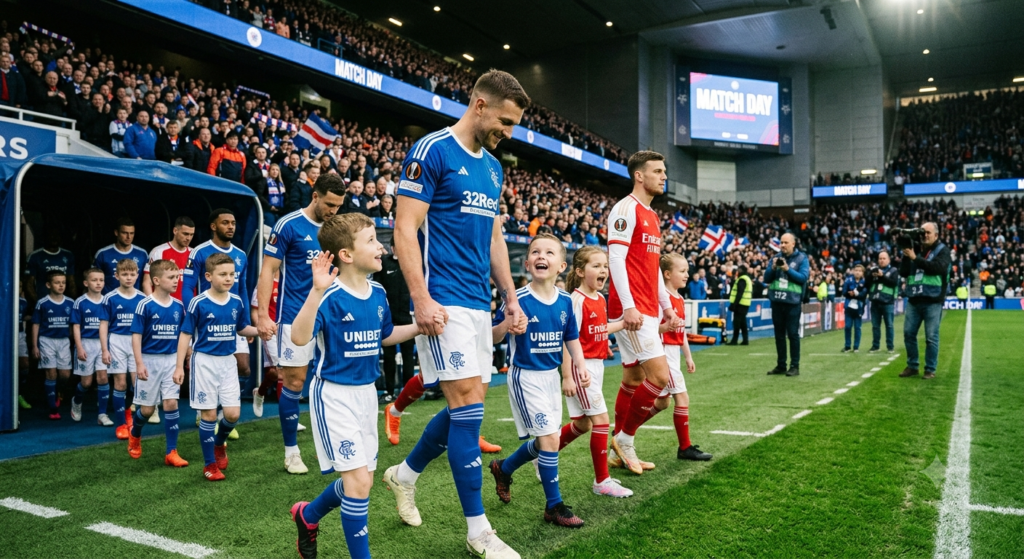
Football is more than just a game played for 90 minutes. It is a sport built around emotions, traditions, values, and connections between people. Before almost every major football match around the world, fans see a special moment that has become a familiar part of the game: Why Do Football Players Walk Out With Children
These young children, often called mascots or player escorts, walk alongside footballers during the pre-match ceremony before the referee blows the whistle. For many fans, this has become a normal part of football, but there is a deeper meaning behind this tradition.
The sight of professional players entering the stadium with children represents respect, hope, unity, and the future of football. It creates a powerful message that the sport is not only about competition but also about inspiring the next generation.
The Reason Why do Football Players Walk Out With Children
The biggest reason football players walk out with children is to promote positive values and connect professional football with young fans. Football clubs and organizations understand that children are the future supporters, players, and ambassadors of the sport.
When a child walks onto the pitch beside a famous footballer, it can become a life-changing memory. For a young fan, standing next to a player they admire creates excitement and inspiration that can last forever.
The tradition reminds everyone that football is not only about winning trophies. It is also about creating dreams and encouraging young people to participate in the sport.
History of Players Walking Out With Mascots
The tradition of footballers entering the field with children became popular in modern football during the late 20th century. Many clubs started introducing mascots as part of their matchday experience to make games more enjoyable for families.
Over time, this practice spread across different leagues, including international competitions, domestic leagues, and youth tournaments. Today, it is common to see children walking out with players in competitions organized by football associations around the world.
Major tournaments such as the FIFA World Cup, UEFA Champions League, and European Championship have helped make this tradition globally recognized.
Although the exact origin is difficult to identify, the idea has always been connected with creating memorable experiences for children and promoting the positive side of football.
What Does a Child Mascot Represent?
A child mascot is not just someone who walks onto the field before a match. The role carries several important meanings.
| Meaning | Explanation |
|---|---|
| Future of Football | Children represent the next generation of players and supporters |
| Inspiration | Meeting professional players can motivate children to follow their dreams |
| Respect | The tradition promotes respect between players, fans, and communities |
| Unity | Players from different backgrounds come together through football |
| Happiness | It creates a memorable experience for young fans |
The presence of children helps show that football belongs to everyone, regardless of age, nationality, or background.
Creating Special Memories for Young Fans
For professional footballers, walking onto a pitch may happen hundreds of times during their careers. However, for a child mascot, it may be a once-in-a-lifetime experience.
Imagine being a young football fan and walking beside a player like Lionel Messi, Cristiano Ronaldo, Kylian Mbappé, or another football superstar. That short walk from the tunnel to the centre of the pitch can become one of the most unforgettable moments of childhood.
Many children who participate in this tradition keep photographs, jerseys, and memories from the event for many years.
Football clubs understand the emotional impact of these experiences. A young fan who feels connected to a club at an early age is more likely to become a lifelong supporter.
Promoting Respect and Fair Play
Football is a competitive sport where emotions can become intense. Players fight for victories, trophies, and important points. However, the presence of children before the match creates a reminder that football should always be played with respect.
When players walk onto the field holding children’s hands, it creates a peaceful and positive atmosphere before the competition begins.
It sends a message that:
- Respect is more important than rivalry.
- Football should bring people together.
- Competition should always include fair play.
Even when two teams are strong rivals, the pre-match mascot ceremony shows that football remains a shared passion.
Why Clubs Use Child Mascots
Football clubs use child mascots for several reasons beyond tradition. It is also an important part of fan engagement and community connection.
1. Building Stronger Relationships With Fans
Football clubs depend heavily on their supporters. Creating special experiences for children helps clubs develop emotional relationships with younger generations.
A child who walks onto the pitch with players may develop a stronger connection with the club and continue supporting it throughout life.
2. Encouraging Youth Participation
Seeing professional footballers close up can inspire children to play football themselves. Many young players dream of becoming professionals after experiencing moments like these.
Clubs often use mascot programs alongside youth academies and community projects to encourage children to become involved in sports.
3. Supporting Community Values
Football clubs are often important parts of their local communities. Mascot programs allow clubs to give something special back to supporters.
Many clubs offer opportunities for children from different backgrounds, including local schools, charities, and youth organizations.
How Children Become Football Mascots
The process of becoming a football mascot depends on the club or competition. Some clubs allow families to purchase mascot packages, while others select children through community programs or competitions.
A typical mascot experience may include:
| Activity | Description |
|---|---|
| Stadium Arrival | Children arrive before the match and receive instructions |
| Player Meeting | They meet football players before the game |
| Kit Preparation | They wear special mascot uniforms |
| Tunnel Walk | They walk onto the pitch with players |
| Match Experience | They watch the game from special areas |
For many children, the experience feels like stepping into the world of professional football.
Football Mascots in International Competitions
International football competitions have made player mascots even more famous. During major tournaments, millions of people around the world watch players enter stadiums with children beside them.
At events like the FIFA World Cup, this tradition represents the global nature of football. Children from different countries, cultures, and backgrounds become part of the biggest sporting events on Earth.
It also highlights football’s ability to connect people across borders.
The Emotional Impact on Players
While the experience is mainly designed for children, football players also appreciate the meaning behind it.
Many professional players have children themselves and understand the excitement young fans feel. Seeing a child’s happiness before a match can create a positive emotional moment before the pressure of competition begins.
Some players interact with mascots by talking to them, smiling, or offering encouragement. These small gestures can have a huge impact on young fans.
More Than Just a Matchday Tradition
At first glance, players walking out with children may look like a simple ceremony. However, it represents much more than that.
It represents:
- Dreams of young footballers.
- The relationship between clubs and communities.
- The importance of respect in sports.
- The connection between current stars and future generations.
Football has always been a sport where emotions matter. The mascot tradition adds a human element before the competition starts.
Conclusion
Football players walk out with children because the tradition represents hope, inspiration, and the future of the sport. These young mascots are a reminder that football is not only about goals, trophies, and victories but also about creating memories and bringing people together.
For a professional player, walking onto the pitch may be another matchday routine. For a child, however, it can be a moment they remember for the rest of their life.
The tradition continues to grow because it captures the true spirit of football: passion, respect, and the belief that every young fan has the potential to become part of the beautiful game.
