


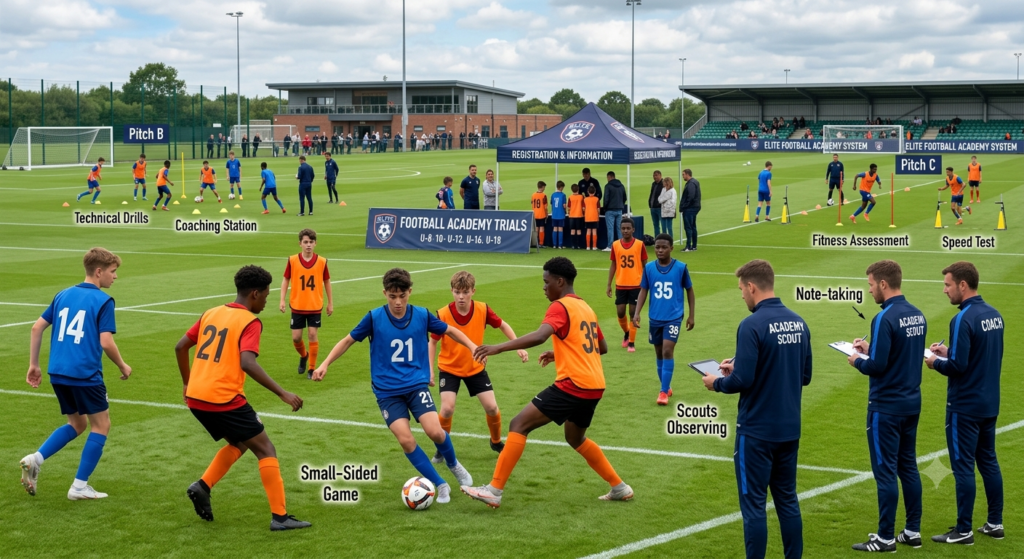
For thousands of young footballers around the world, earning a place in a football academy is the first major step toward a professional career. Almost every top club operates an academy system where talented players receive expert coaching, competitive match experience, fitness training, and personal development. However, before joining an academy, players usually need to pass football academy trials.
Football academy trials are designed to identify players with the technical ability, physical qualities, attitude, and potential to develop into future professionals. Contrary to popular belief, scouts don’t always choose the fastest or strongest player. They often look for intelligent decision-makers, disciplined individuals, and players who show consistent effort throughout the trial.
This guide explains everything you need to know about football academy trials, including what they involve, how to prepare, common mistakes to avoid, and tips that can improve your chances of success.
What Are Football Academy Trials?
Football academy trials are assessment sessions where coaches and scouts evaluate players over one or several days. These trials allow clubs to identify talented youngsters who may fit their academy system.
Depending on the academy, trials may include:
- Technical drills
- Small-sided games
- Full matches
- Fitness tests
- Tactical exercises
- Interviews with players and parents
Some academies invite players through scouting networks, while others hold open trials where anyone meeting the age requirements can register.
Why Football Academies Hold Trials
Academies invest significant time and resources in developing young players. Trials help coaches identify those with the highest long-term potential rather than simply selecting the best player on the day.
Main Objectives of Academy Trials
| Objective | Purpose |
|---|---|
| Assess technical ability | Passing, dribbling, shooting, first touch |
| Evaluate game intelligence | Positioning and decision-making |
| Measure physical qualities | Speed, stamina, balance, agility |
| Test mentality | Confidence, discipline, teamwork |
| Identify future potential | Ability to improve over time |
Who Can Attend Football Academy Trials?
Most football academies organize trials for different age groups.
| Age Group | Typical Academy Level |
|---|---|
| Under 8 | Foundation Phase |
| Under 10 | Development Phase |
| Under 12 | Youth Development |
| Under 14 | Advanced Development |
| Under 16 | Scholarship Stage |
| Under 18 | Elite Youth Academy |
Some professional clubs also organize trials for adult development squads and reserve teams.
What Scouts Look For
Many players believe scoring goals is the easiest way to impress scouts. While goals certainly help, coaches evaluate much more than statistics.
They observe:
Technical Skills
- Ball control
- Passing accuracy
- First touch
- Dribbling
- Shooting
- Crossing
- Tackling
Tactical Awareness
- Positioning
- Movement off the ball
- Communication
- Decision-making
- Reading the game
Physical Attributes
- Acceleration
- Sprint speed
- Endurance
- Strength
- Balance
- Agility
Mental Qualities
- Confidence
- Leadership
- Work ethic
- Positive attitude
- Coachability
Players who stay focused throughout the session often stand out more than those who attempt flashy tricks.
Types of Football Academy Trials
Different clubs use different trial formats.
1. Open Trials
Anyone can register if they meet the eligibility requirements.
Advantages include:
- Accessible to many players
- Great exposure
- Opportunity to impress multiple scouts
2. Invitation Trials
These are reserved for players recommended by scouts, coaches, or partner clubs.
Invitation trials are usually more competitive because participants have already demonstrated potential.
3. Residential Trials
Some elite academies invite shortlisted players for several days or even weeks.
These longer trials evaluate:
- Training habits
- Lifestyle
- Recovery
- Nutrition
- Team integration
Typical Trial Schedule
| Session | Activity |
|---|---|
| Registration | Player check-in |
| Warm-up | Dynamic stretching and mobility |
| Technical Drills | Passing, dribbling, shooting |
| Possession Games | Small-sided exercises |
| Match Play | 7v7 or 11v11 games |
| Cool Down | Recovery and feedback |
How to Prepare for Football Academy Trials
Preparation begins long before the trial day.
Improve Your Fitness
Players should focus on:
- Sprint training
- Endurance runs
- Agility exercises
- Core strength
- Flexibility
Fitness helps players maintain performance during long sessions.
Practice Technical Skills Daily
Spend time improving:
- First touch
- Passing
- Ball control
- Weak-foot ability
- Shooting
- Crossing
Consistency matters more than perfection.
Watch Professional Football
Study players who play your position.
Observe:
- Movement
- Positioning
- Decision-making
- Defensive responsibilities
- Communication
Learning from professionals can improve your football intelligence.
Match-Day Preparation
The night before:
- Sleep at least 8 hours.
- Prepare your football kit.
- Pack water and snacks.
- Check travel arrangements.
On the day:
- Eat a balanced meal.
- Arrive early.
- Warm up properly.
- Stay calm.
Good preparation helps reduce nerves.
Essential Equipment Checklist
| Item | Required |
|---|---|
| Football boots | ✔ |
| Shin guards | ✔ |
| Football socks | ✔ |
| Training shirt | ✔ |
| Shorts | ✔ |
| Water bottle | ✔ |
| Healthy snack | ✔ |
| Medical information | If required |
During the Trial
The trial itself is your opportunity to show your abilities.
Stay Confident
Confidence doesn’t mean trying impossible skills.
Instead:
- Ask for the ball.
- Make smart decisions.
- Communicate with teammates.
- Stay positive after mistakes.
Every player misplaces passes occasionally. Scouts often notice how players respond to errors.
Play Simple Football
Trying to impress with complicated tricks often backfires.
Instead:
- Complete accurate passes.
- Move into space.
- Support teammates.
- Defend when needed.
Simple football is often the most effective.
Common Mistakes to Avoid
Many talented players miss out because of avoidable errors.
| Mistake | Better Approach |
|---|---|
| Showing off | Play naturally |
| Ignoring teammates | Communicate regularly |
| Giving up after mistakes | Recover quickly |
| Complaining to referees | Stay focused |
| Poor fitness | Train consistently |
| Arriving late | Be early |
Nutrition Before a Trial
Fueling your body correctly can improve performance.
Good choices include:
- Oatmeal
- Bananas
- Whole-grain toast
- Chicken and rice
- Pasta
- Yogurt
- Plenty of water
Avoid:
- Sugary drinks
- Fast food
- Heavy fried meals
- Energy drinks
Hydration is equally important, especially in warm weather.
Mental Preparation
Football trials can feel stressful, but confidence grows with preparation.
Helpful strategies include:
- Visualize positive performances.
- Focus on one play at a time.
- Accept that mistakes happen.
- Listen carefully to coaches.
- Encourage teammates.
A positive mindset often separates successful players from equally talented competitors.
What Happens After the Trial?
Once the sessions are complete, coaches review every player’s performance.
Possible outcomes include:
| Result | Meaning |
|---|---|
| Selected | Offered a place in the academy |
| Invited Back | Additional assessment required |
| Development Program | Extra coaching before another trial |
| Unsuccessful | Encouraged to continue improving |
Remember that rejection doesn’t mean the end of your football journey. Many professional players were turned down by academies before eventually succeeding elsewhere.
Tips to Increase Your Chances of Success
- Train consistently throughout the year.
- Improve your weaker foot.
- Stay physically fit.
- Communicate during games.
- Make quick decisions.
- Show a positive attitude.
- Follow coaching instructions.
- Play with confidence but remain disciplined.
- Focus on teamwork rather than individual glory.
- Never stop working after one good performance.
Benefits of Joining a Football Academy
Academy players receive far more than regular football training.
Some advantages include:
- Professional coaching
- High-quality facilities
- Competitive league matches
- Sports science support
- Strength and conditioning programs
- Video performance analysis
- Educational support
- Pathway toward professional football
Even players who don’t become professionals often develop valuable life skills such as discipline, teamwork, leadership, and resilience.
Final Thoughts
Football academy trials are a challenging but rewarding opportunity for young players with ambitions of reaching the highest levels of the game. While natural talent is important, coaches are equally interested in attitude, consistency, and a willingness to learn. The players who stand out are often those who combine solid technical ability with intelligent decision-making, hard work, and respect for teammates and coaches.
Preparation is the key to success. By improving your fitness, sharpening your technical skills, maintaining a positive mindset, and approaching the trial with confidence, you can give yourself the best possible chance of making a lasting impression. Whether you earn a place immediately or not, every trial is a valuable learning experience that helps you grow as a footballer.
