


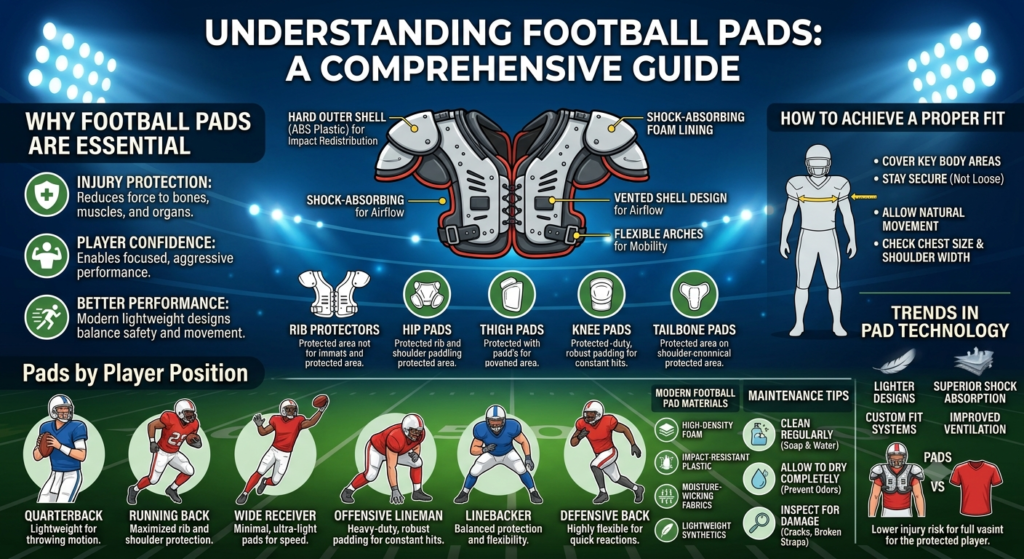
Football is one of the most physical sports in the world. Every play involves speed, strength, and intense contact between players. While skill, strategy, and athletic ability are important, safety equipment plays an equally important role in protecting athletes. Among all football gear, football pads are some of the most essential pieces of equipment.
Football pads are designed to absorb impact, reduce the risk of injuries, and allow players to perform confidently on the field. From youth players learning the basics of the game to professional athletes competing at the highest level, every football player relies on protective padding.
Choosing the right football pads is not simply about buying the biggest or most expensive option. Players need equipment that fits properly, provides protection, and allows freedom of movement. This guide explains everything you need to know about football pads, including their types, importance, materials, sizing, and buying tips.
What Are Football Pads?
Football pads are protective pieces of equipment worn underneath a player’s uniform. They are made from impact-resistant materials that help protect important areas of the body during tackles, collisions, and falls.
A typical football player wears pads around several key areas:
- Shoulders
- Chest
- Ribs
- Back
- Hips
- Thighs
- Knees
Different positions may require different levels of protection. For example, a running back who receives frequent tackles may need more padding than a wide receiver who focuses on speed and movement.
Why Are Football Pads Important?
Football involves repeated physical contact. Players often collide at high speeds, making protection necessary at every level of competition.
Here are some major reasons football pads are important:
1. Injury Protection
The primary purpose of football pads is reducing the impact of collisions. They help protect bones, muscles, and internal organs from direct hits.
Although pads cannot completely prevent injuries, they can significantly reduce the force transferred to the body.
2. Player Confidence
When athletes feel protected, they can focus more on performance rather than worrying about every collision.
Confidence helps players make stronger tackles, block effectively, and compete aggressively.
3. Better Performance
Modern football pads are designed to balance protection and mobility. Lightweight materials allow players to move quickly without feeling restricted.
Types of Football Pads
Football pads come in several different styles depending on the body area they protect.
| Type of Pad | Protected Area | Main Purpose |
|---|---|---|
| Shoulder Pads | Shoulders and upper body | Protect against tackles and collisions |
| Rib Protectors | Chest and ribs | Reduce impact around the torso |
| Hip Pads | Hips and lower body | Protect hip bones during falls |
| Thigh Pads | Thigh muscles | Prevent bruising and impact injuries |
| Knee Pads | Knees | Provide protection during contact |
| Tailbone Pads | Lower back area | Protect from hard falls |
Each type has a specific role in keeping players safer.
Shoulder Pads: The Most Important Football Pads
When people think about football pads, shoulder pads are usually the first thing that comes to mind.
Shoulder pads protect:
- Shoulders
- Collarbone
- Upper chest
- Upper back
They are designed with a hard outer shell and inner cushioning system.
Modern shoulder pads are lighter than older versions while still providing excellent protection.
How Shoulder Pads Work
Shoulder pads use multiple layers to absorb impact.
A typical design includes:
Outer Shell
The outer plastic shell spreads the force of impact across a larger area.
Foam Padding
The foam absorbs energy and reduces the amount of force reaching the player’s body.
Ventilation System
Small openings improve airflow and help keep players comfortable.
Football Pads by Player Position
Different football positions experience different types of contact, so their equipment needs vary.
| Position | Recommended Protection |
|---|---|
| Quarterback | Lightweight shoulder pads for mobility |
| Running Back | Strong shoulder and rib protection |
| Wide Receiver | Lightweight pads for speed |
| Offensive Lineman | Maximum protection for collisions |
| Defensive Lineman | Heavy-duty pads for contact |
| Linebacker | Balanced protection and movement |
| Defensive Back | Flexible pads for quick reactions |
A quarterback usually needs more freedom to throw, while linemen require maximum protection because they experience constant physical contact.
Football Pad Materials
Technology has changed football equipment significantly. Modern football pads use advanced materials designed for comfort and protection.
Common materials include:
High-Density Foam
Foam is commonly used because it absorbs shock effectively.
Plastic Shells
Hard plastic provides a protective barrier against powerful impacts.
Lightweight Synthetic Materials
Modern designs use materials that reduce weight without sacrificing safety.
Moisture-Wicking Fabrics
Many pads include fabrics that help control sweat during games and practices.
How to Choose the Right Football Pads
Selecting football pads requires careful consideration.
1. Proper Fit
The most important factor is fit.
Pads that are too loose may move during contact and fail to provide proper protection. Pads that are too tight can restrict movement and cause discomfort.
A good fit should:
- Cover important body areas
- Stay secure during movement
- Allow comfortable breathing
- Permit natural arm movement
2. Consider Your Position
Your playing position should influence your choice.
A receiver may prefer lightweight pads, while a linebacker may choose stronger protection.
3. Check the Size Guide
Manufacturers usually provide sizing charts based on:
- Height
- Weight
- Chest measurement
- Shoulder width
Always check measurements before purchasing.
Example sizing guide:
| Player Size | Typical Age Group | Weight Range |
|---|---|---|
| Youth Small | Young players | 50–80 lbs |
| Youth Medium | Children | 70–100 lbs |
| Youth Large | Older children | 90–130 lbs |
| Adult Small | Teen players | 120–160 lbs |
| Adult Medium | Average adults | 150–200 lbs |
| Adult Large | Larger players | 190+ lbs |
Sizes can vary between brands, so measurements are always better than guessing.
Youth Football Pads
Young players need special attention when selecting protective equipment.
Youth football pads are designed with:
- Smaller body shapes
- Lightweight materials
- Comfortable designs
Parents should avoid buying oversized pads hoping that children will grow into them. Poor-fitting equipment may reduce protection and affect movement.
How to Maintain Football Pads
Proper maintenance helps football pads last longer.
Clean Regularly
Sweat and dirt can build up after games and practices.
Use mild soap and water to clean pads.
Allow Proper Drying
Never store wet pads inside a closed bag because bacteria and unpleasant odors can develop.
Check for Damage
Inspect pads regularly for:
- Cracks
- Broken straps
- Damaged foam
- Loose parts
Damaged equipment should be replaced.
Football Pads vs No Pads: Why Protection Matters
Some casual football activities may not require full protective equipment, but organized football requires proper safety gear.
Playing without pads increases the chance of:
- Bruises
- Muscle injuries
- Bone injuries
- Serious impact-related problems
Football is designed as a contact sport, so proper equipment is a necessary part of playing safely.
Latest Trends in Football Pad Technology
Football equipment continues to improve every year.
Some modern innovations include:
Lightweight Designs
Manufacturers are creating thinner pads that provide strong protection without extra weight.
Better Shock Absorption
New foam technologies help manage impact more effectively.
Custom Fit Systems
Some pads now allow players to adjust the fit for better comfort.
Improved Ventilation
Better airflow helps players stay cooler during intense games.
Conclusion
Football pads are one of the most important pieces of equipment for any football player. They provide protection, improve confidence, and allow athletes to compete safely in a demanding sport.
Whether you are a beginner learning the game, a parent buying equipment for a young athlete, or an experienced player looking for better protection, choosing the right football pads is essential. The best option should offer a combination of comfort, durability, proper fit, and protection.
As football continues to evolve, pad technology will continue improving, giving players better safety equipment without limiting their performance. Investing in quality football pads is not just about protecting the body—it is about helping players enjoy the game with confidence.
